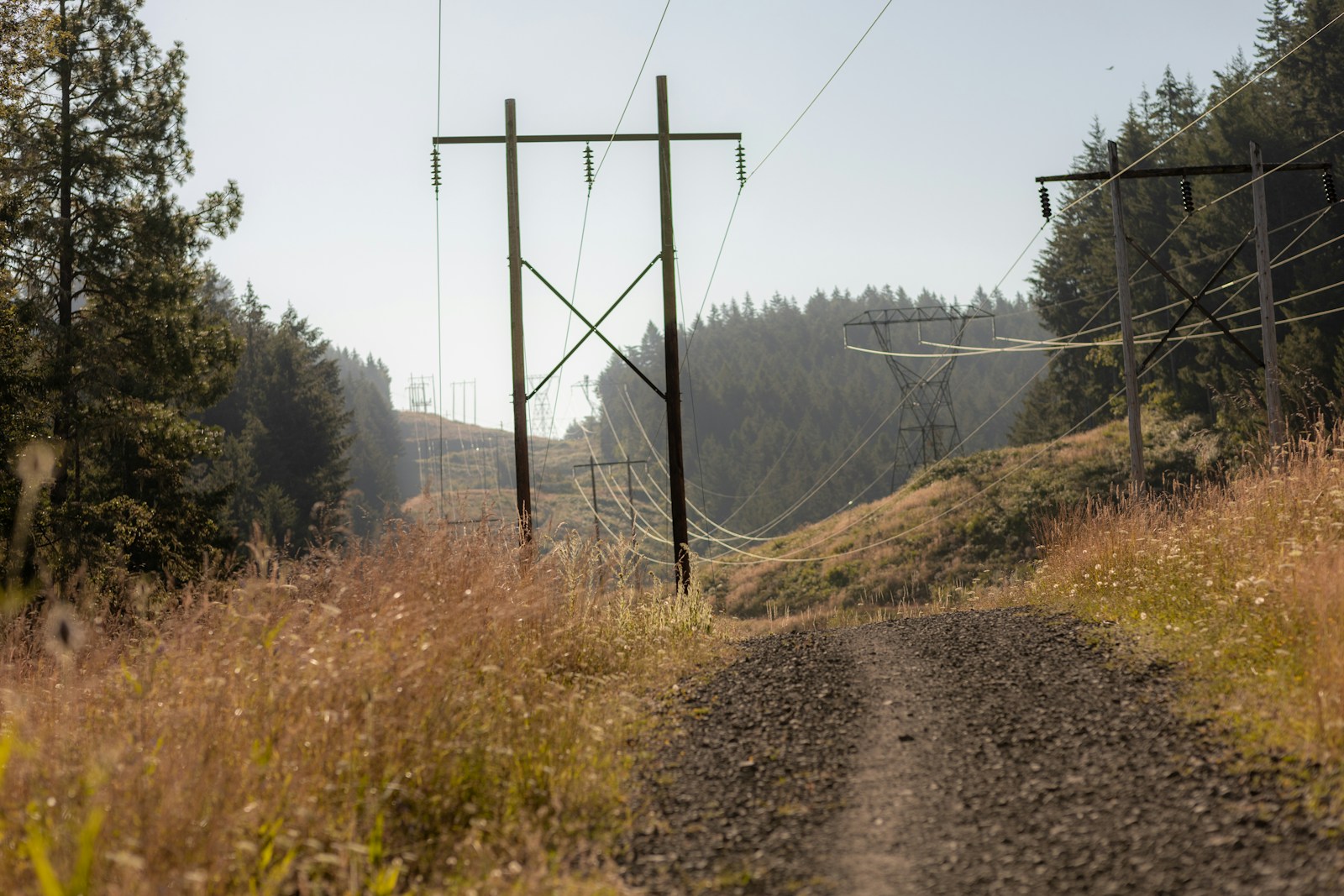
If you run crews or critical assets outside metro grids, you already feel the rural connectivity gap. Fiber stops miles short of your pad site, LTE fades after the county line, and microwave backhaul isn’t practical over mountains or marsh. Meanwhile, your work still has to get done, safely, compliantly, and on time. That’s where satellite and VSAT step in. With modern GEO, MEO, and LEO options, you can stand up reliable links anywhere you can see the sky. In this guide, you’ll see where the gap comes from, why satellite is a fit for remote operations, how to design for reliability, and what it really costs to deploy and maintain.
The Rural Connectivity Gap In The US Today
Coverage And Backhaul Limitations
You can have bars on a coverage map and still have no usable bandwidth. Rural towers often depend on constrained backhaul, aging microwave hops or congested middle-mile fiber, which caps throughput and spikes latency during peak hours. Terrain makes it worse: forests, canyons, and ridgelines degrade RF propagation, so a “covered” census block doesn’t mean your well site or substation gets a stable link.
In much of the Mountain West, Upper Midwest, and tribal lands, contiguous LTE is patchy and 5G mid-band doesn’t reach. Even when a tower is in range, uplink from dense telemetry or video can saturate quickly, and carrier prioritization may push enterprise traffic behind consumer loads.
Economic Barriers To Fiber And Terrestrial Builds
The math just doesn’t pencil out for many rural builds. Trenching fiber routinely runs $30,000–$60,000 per mile in easy ground, and far more across rock, wetlands, or rights-of-way battles. For a single mine, wind farm, or pipeline segment, you may need dozens of miles just to get to a core POP. Microwave can bridge gaps, but requires line-of-sight, tall structures, and regular path maintenance. Carriers prioritize denser markets where the payback period is measured in months, not years.
Consequences For Safety, Compliance, And Growth
Connectivity isn’t a convenience anymore. You need it for SCADA polling, methane leak detection, drone inspections, ELD compliance, remote badge-in, telemedicine access, and real-time camera feeds. When links drop:
- Safety risk rises because alarms arrive late, if they arrive at all.
- Compliance drifts: missed ELD pings, delayed environmental reporting, and audit gaps cost real money.
- Productivity stalls: crews can’t sync plans, equipment sits idle waiting for authorizations, and asset utilization slides.
Add it up and the rural connectivity gap becomes a business risk, not just a tech nuisance.
Why Satellite And VSAT Fit Remote Operations
How VSAT Works In Plain Terms
VSAT (very small aperture terminal) is a compact satellite ground station, think a dish, modem, and power, linking your site to a satellite and back to the internet or a private cloud. You mount the dish with a clear view of the sky, point it at an orbital fleet, and your site comes online. Modern terminals auto-acquire the satellite, authenticate, and pull bandwidth from a shared or dedicated pool you subscribe to.
Because the satellite is your backhaul, you’re not waiting for fiber to the fence line. If you can get a mast in the ground and power to the terminal, you can light up a network.
Performance: Latency, Throughput, And Availability
You should align expectations with physics:
- Latency: GEO links typically sit around 550–700 ms round-trip. MEO ranges roughly 120–180 ms. LEO can hit 25–60 ms under good sky visibility. For SCADA, telemetry, VoIP, and many cloud apps, all three are workable with the right QoS. For real-time control loops and fast-twitch trading, probably not your use case, LEO is the better fit.
- Throughput: Enterprise VSAT plans commonly deliver 5–50 Mbps down and 2–20 Mbps up per site, with higher tiers available. LEO services often exceed 100 Mbps down and 10–40 Mbps up in many US regions. Actual rates depend on plan, contention ratios, and sky view.
- Availability: Properly engineered satellite links can reach 99.5–99.9% availability. Weather affects Ka- and Ku-band (rain fade), but link budgets, adaptive coding/modulation, and site hardening mitigate most outages.
GEO, MEO, And LEO: Strengths And Trade-Offs
- GEO (geostationary): One satellite covers a huge footprint, great for broad coverage and steady beams. Pros: mature hardware, widespread availability, predictable service. Cons: higher latency, larger antennas, more sensitive to heavy rain on high-frequency bands.
- MEO (medium earth orbit): Shorter path length cuts latency: spot beams offer strong capacity. Pros: good balance of latency and coverage. Cons: fewer providers, moving satellites require tracking or electronically steered antennas.
- LEO (low earth orbit): Lowest latency and high throughput with dense constellations. Pros: excellent for interactive apps, video, and backhaul augmentation. Cons: requires open sky, network capacity varies by cell load, and some enterprise features (SLA, static IPs, private routing) may require specific plans or integrators.
In practice, you’ll often blend them, use LEO for primary bandwidth and a GEO plan as an inexpensive, always-on backup.
Mission-Critical Use Cases
Energy, Mining, And Utilities
You can’t babysit every pump, pad, and pit. Satellite extends your SCADA, metering, and security to the last mile of nowhere. In oil and gas, VSAT backhauls PLC telemetry, gas lift optimization, and flare monitoring. In mining, you can stream pit camera feeds, coordinate autonomous haulage, and sync mine planning data. Electric cooperatives and utilities use satellite to reach reclosers, remote substations, and AMI collectors when fiber would take years.
Agriculture, Forestry, And Environmental Monitoring
From variable-rate irrigation to connected harvesters, you need uplink in fields far from town. Satellite ties together equipment telematics, soil sensors, and edge analytics. Foresters push drone data, wildfire cameras, and worker safety check-ins over VSAT. Environmental teams drop portable terminals with sensor buoys, air-quality stations, or temporary research sites and stay connected for months.
Public Safety, Disaster Response, And Tribal Lands
When storms shred terrestrial networks, satellite becomes the first-in, last-out comms layer. Incident command posts can spin up bandwidth in an hour, support CAD, GIS, and body-worn camera offloads, and backhaul 9-1-1 call routing if trunks fail. Tribal governments use satellite to stitch together clinics, schools, and administrative sites while longer-term fiber projects progress, ensuring continuity of care and services.
Designing Reliable Field Networks
Primary, Backup, And Burst Capacity Patterns
Design to your traffic reality, not just a pretty spec sheet. A common pattern is LEO primary for latency-sensitive apps, paired with a smaller GEO plan for always-on backup. You can also run GEO primary for steady SCADA with an on-demand LEO “burst” plan when crews arrive and need 100+ Mbps for updates and video calls. Failover should be policy-based, not manual, triggered by latency, packet loss, or throughput thresholds.
Hybrid Architectures With LTE/5G And SD-WAN
Where cellular is decent, blend it. SD-WAN lets you:
- Bond multiple links (LEO + LTE + GEO) for aggregate throughput.
- Steer apps: send voice and interactive traffic over the lowest-latency path, push bulk syncs to GEO during off-peak.
- Maintain session continuity during failover with tunnels and path health checks.
You’ll want dual-path power and dual WAN routers at key sites, plus out-of-band management so you can fix things remotely when a field tech is 200 miles away.
Power, Antenna Placement, And Weather Hardening
Give the terminal power it trusts: conditioned AC, or DC with solar + battery + charge controller sized for your worst week of weather. Mount antennas with unobstructed sky, away from cranes, towers, or trees that can shadow tracks, especially critical for LEO. Use proper grounding, surge protection, and cable runs that won’t wick water.
For weather, overbuild a little. Radomes or de-icing kits in snow belts, higher-gain antennas in heavy-rain regions, and line-of-sight surveys that account for foliage growth. Tune your link budget with realistic rain rates, not brochure sunshine. And don’t forget physical security: cages, tamper sensors, and cameras deter copper theft and vandalism.
From Budget To Rollout: Practical Steps And ROI
Hardware, Install, And Monthly Service Costs
Plan for three buckets:
- Hardware: Consumer-style LEO terminals can land in the $500–$2,500 range per site. Enterprise VSAT kits (modem, BUC/LNB, dish, mount) typically run $5,000–$20,000 depending on band and antenna size. Electronically steered antennas cost more but simplify installs and mobility.
- Install: Simple mounts might be a few hundred dollars: remote industrial sites with trenching, masts, and power runs can hit $2,000–$5,000+. Factor travel time.
- Service: Light-duty telemetry plans can be a few dozen to a few hundred dollars monthly. High-throughput enterprise plans range from low hundreds to a couple thousand dollars per site, depending on committed information rate (CIR), burst capacity, and SLA.
Data Policies, Fair Use, And Throttling
Read the fine print. Many shared plans use fair-use policies: after a threshold, your traffic may be deprioritized or throttled during congestion. That’s not a dealbreaker, but you should size plans to your peak windows and consider:
- Nightly windows for bulk updates and backups.
- Tiered QoS so SCADA and VoIP beat bulk file syncs.
- Private routing, static IPs, and traffic shaping for compliance and security.
If you need guaranteed performance, buy a CIR or dedicated bandwidth slice, even a small one for critical apps.
Proving Value: Uptime, Safety, And Productivity KPIs
Treat connectivity like any asset. Baseline what “down” costs you, then measure:
- Uptime and mean time to repair (MTTR) across links.
- Safety metrics tied to connectivity: alarm delivery times, lone-worker check-in success, and incident response intervals.
- Productivity: crew idle time reduction, successful remote updates, and asset utilization.
Tie these to dollars, truck rolls avoided, fines prevented, hours reclaimed, and your ROI case writes itself. Many teams see payback within months when satellite replaces repeated site visits or prevents a single compliance penalty.
What’s Next For Remote Connectivity
5G NTN And Direct-To-Device Paths
Non-terrestrial networks (NTN) in 3GPP Release 17/18 bring satellites into the 5G family. You’re already seeing early direct-to-device SMS and emergency features on standard phones via satellite, with data services on the horizon. For operations, that means future handsets and IoT modules could maintain basic links without special terminals, useful as a safety backstop when all else fails.
Smarter Terminals, eSIM, And Multi-Orbit
Electronically steered antennas are getting cheaper and better, tracking LEO/MEO without moving parts. Multi-orbit modems can pick the best path in real time, and eSIM lets you juggle multiple cellular carriers around your satellite link. Add SD-WAN and you get intelligent, policy-driven routing that keeps users online even as conditions shift.
Grants, Subsidies, And Regulatory Shifts
Funding is improving for hard-to-serve areas. Federal programs like BEAD, USDA ReConnect, and the Tribal Broadband Connectivity Program are pushing dollars into middle-mile and last-mile builds. On the regulatory side, the FCC is opening doors for satellite-to-phone services and streamlining spectrum coordination, which eventually expands your options and drives healthier pricing.
Conclusion
You can’t wait years for fiber when operations need connectivity today. Satellite and VSAT bridge the rural connectivity gap with performance good enough for SCADA, cameras, and everyday collaboration, and with the right design, they do it reliably. Start with your traffic profile, pick the orbit mix that fits, harden power and mounts, and enforce QoS. Budget honestly, document the wins in uptime and safety, and refine over the first 90 days. Do that, and your remote sites stop being black holes on the map, they become first-class citizens on your network.
No responses yet